
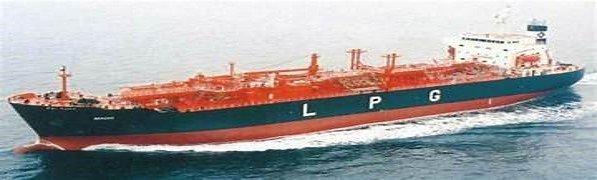
Cargo and Ballast Handling Course – LPG tanker (LCHS) IMO Model 1.35
This course meets the requirements laid down in Regulation 1/12, Sections A-1/12, B-1/12 and Table A-V/1-2-2 of the STCW Convention and Code as amended in 2010 and is in compliance with IMO Model Course 1.35.
Objectives:
The objective of the LCHS Gas course is to provide participants with the necessary theoretical knowledge and practical skills to safely and efficiently manage cargo operations on gas carrier.
Supported by a cloud-based simulator
By the end of the course, participants will be able to:
Supported by a cloud-based simulator
By the end of the course, participants will be able to:
- Understand the properties and hazards of liquefied gas cargoes.
- Demonstrate competence in planning, executing, and monitoring cargo operations, including loading, discharging, and cargo conditioning.
- Apply international safety standards and regulatory requirements, including the International Maritime Organization (IMO) guidelines and the International Gas Carrier (IGC) Code.
- Operate and troubleshoot cargo handling equipment and systems using a simulator.
- Respond effectively to emergencies, such as gas leaks or equipment malfunctions, in a safe and timely manner.
- Ensure compliance with the STCW Convention, SOLAS, and other relevant maritime regulations. This course equips officers and crew with essential skills to contribute to the safety and efficiency of gas carrier operations at sea.
Content:
- To develop a better understanding of the basic operation of Fully refrigerated LPG carrier
- Preloading
- To handle the operations in a safe manner, using the simulator
- Loading on the simulator with single and multiple cargoes.
- Pre discharging
- Cargo compressor operation during loading, discharging and en route
- Ballasting and De-Ballasting
- Inerting, Purging, warming up, Gassing up, Gas freeing
- Cargo Calculations
- Pump theory and Operations
- LPG Tanker Hazards
- Gas measurement
Whether you prefer a call or an email, we’re here to assist you.